

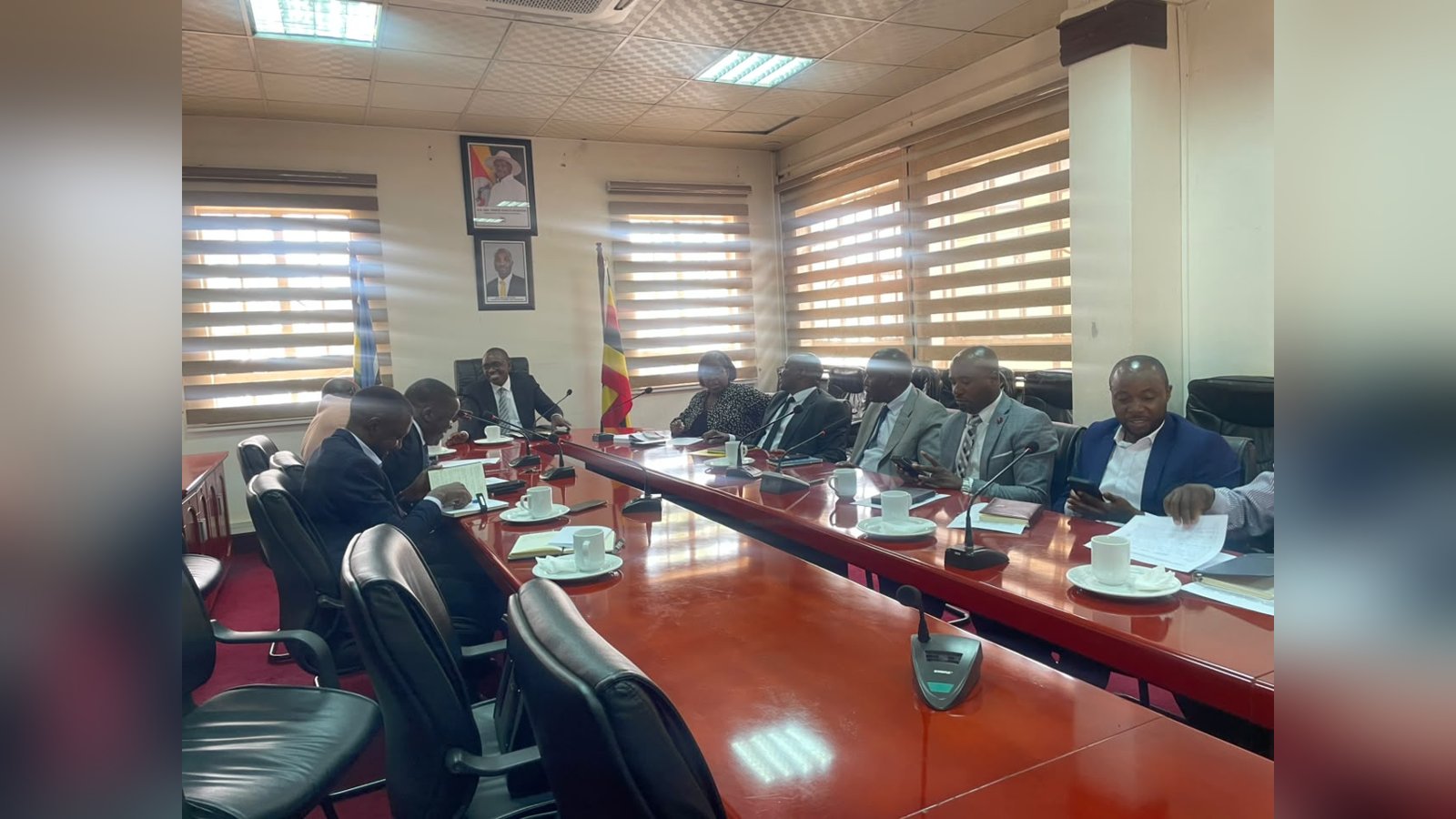
Export Logistics Support Foundation (ELSF), Ministry of Works and Transport (MoWT) Uganda Railways Corporation (URC) and CINAT Group Ltd representatives during discussions on public-private partnerships, cold chain development and Uganda’s export logistics.
CINAT Group participated in a stakeholder engagement meeting with Export Logistics Support Foundation (ELSF), Ministry of Works and Transport (MoWT) and Uganda Railways Corporation (URC) on 20 October 2026 to discuss strengthening public-private sector collaboration, addressing logistics infrastructure gaps, reducing post-harvest losses and enhancing Uganda’s export competitiveness. Discussions focused on transportation costs, cold chain investment and practical solutions to improve export logistics, with particular attention to opportunities for stakeholder coordination, investment promotion and the development of an efficient and sustainable export logistics ecosystem.
ELSF highlighted the inadequacy of cold storage infrastructure and refrigerated transport as key contributors to post-harvest losses, reduced export earnings and limited access to regional and international markets. It identified critical infrastructure gaps at the Mukono Inland Container Depot/Goods Shed and Gulu logistics hub, particularly the lack of operational cold storage facilities and reefer charging infrastructure, and called for renewed engagement with URC to establish arrangements that facilitate private sector investment and participation in the management of cold chain services. The Foundation further advocated for the development of a National Cold Chain Development Roadmap to guide infrastructure planning, prioritise investments and strengthen public-private sector collaboration. The proposed roadmap would be informed by reliable data on cargo volumes, commodity-specific temperature requirements and existing storage capacity to ensure that investments respond to the needs of producers, exporters and logistics operators. ELSF also underscored the need to address regulatory gaps relating to refrigerated vehicles and equipment, taxation and cold storage standards to create a predictable and supportive investment environment. It emphasised that translating these priorities into practical solutions would require coordinated stakeholder engagement, strategic communication, technology adoption and investment mobilisation to strengthen Uganda's cold chain infrastructure, improve export logistics and enhance the country's competitiveness in regional and international markets.
The Ministry of Works and Transport highlighted ongoing investments in rail, water transport and multimodal logistics, emphasising the need for reliable technical data and an assessment of existing storage facilities to guide cold chain planning. A Ministry representative speaking on behalf of Uganda National Bureau of Standards (UNBS) stressed compliance with applicable standards, including temperature requirements for fresh and frozen fish. Meanwhile, URC expressed willingness to revisit the Mukono and Gulu logistics hubs and invited private consolidators to submit formal PPP proposals, creating opportunities for ELSF to facilitate coordinated infrastructure development and private sector investment.
CINAT Group presents a potential strategic partner for ELSF, with capabilities in communications, marketing, technology, logistics and integrated business solutions that could support stakeholder engagement, digital information sharing, investment promotion and sector visibility. Potential areas of collaboration include communicating export logistics priorities, facilitating engagement among government agencies and private operators, developing knowledge-sharing materials, and promoting investment opportunities, including proposed Public-Private Partnership (PPP) arrangements for the Mukono and Gulu logistics hubs. Any partnership would be subject to further discussions to establish shared priorities, define responsibilities and agree on deliverables, while complementing the technical mandates of relevant government institutions, infrastructure operators and standards authorities.
ELSF and URC will explore expansion and PPP arrangements for the Mukono and Gulu logistics hubs, while ELSF and the Ministry of Works and Transport compile technical data and assess existing storage facilities. ELSF will also facilitate private investment proposals, strengthen engagement with agriculture, trade and local government stakeholders, and explore potential collaboration with CINAT Group. The Foundation further proposed moving the National Export Logistics Dialogue to March 2027 to review progress and discuss investment opportunities.
The engagement highlighted the need for stronger public-private sector collaboration to address infrastructure gaps, reduce post-harvest losses and enhance Uganda’s export logistics competitiveness emphasising the importance of optimising existing infrastructure, investing in cold chain facilities and promoting coordinated, evidence-based interventions supported by reliable technical data and clear partnership arrangements. The Foundation identified inadequate cold storage and refrigerated transport as major constraints on export potential and called for renewed engagement with Uganda Railways Corporation (URC) to explore arrangements that attract private sector investment in cold chain infrastructure and integrated logistics services. It further advocated for a National Cold Chain Development Roadmap to guide infrastructure planning, investment priorities, stakeholder responsibilities and public-private sector collaboration, informed by reliable cargo volume data, commodity-specific temperature requirements and assessments of existing storage capacity. ELSF also underscored the need to address regulatory and policy gaps relating to refrigerated vehicles and equipment, taxation and cold storage compliance standards to create a predictable investment environment. Potential collaboration with CINAT Group could complement these efforts through strategic communications, technology, stakeholder engagement and business development, helping translate infrastructure investment priorities into practical solutions that improve the handling of perishable commodities, strengthen export logistics and expand Uganda’s access to regional and international markets.
The Ministry of Works and Transport emphasised the need for reliable technical data, assessments of existing storage facilities and compliance with relevant standards to guide cold chain investments. Uganda Railways Corporation (URC) expressed willingness to revisit the Mukono and Gulu logistics hubs and invited private consolidators to submit formal Public-Private Partnership (PPP) proposals. ELSF will facilitate follow-up discussions on potential infrastructure expansion and private investment in cold storage and refrigerated cargo handling, subject to applicable requirements.
Nelson Rwenaga, the Permanent Secretary, Ministry of Works and Transport encouraged ELSF to strengthen engagement with Ministry of Agriculture, Animal Industry and Fisheries (MAAIF), Ministry of Trade, Industries and Cooperatives (MTIC) and local governments, including Parish Development Model (PDM) stakeholders, to improve coordination between government and the private sector in advancing cold chain development. The meeting emphasised the need for reliable technical data, clear regulatory standards, assessments of existing storage facilities and viable Public-Private Partnership (PPP) arrangements to guide investment and inform the proposed National Cold Chain Development Roadmap. It also underscored the importance of aligning infrastructure investments with agricultural production and export requirements, with potential collaboration with CINAT Group supporting strategic communication, stakeholder engagement and private sector partnerships, while technical and investment decisions remain the responsibility of the relevant institutions.
The engagement reaffirmed ELSF’s commitment to advancing Uganda’s export logistics and cold chain development through coordinated stakeholder engagement, evidence-based planning and practical investment solutions. Follow-up actions will focus on assessing existing storage facilities, compiling technical data, exploring investment opportunities at the Mukono and Gulu logistics hubs, and strengthening collaboration across the agriculture, trade and transport sectors. These efforts, supported by viable Public-Private Partnership (PPP) arrangements and the proposed National Cold Chain Development Roadmap, aim to improve the handling of perishable commodities, reduce post-harvest losses and strengthen Uganda’s export competitiveness.