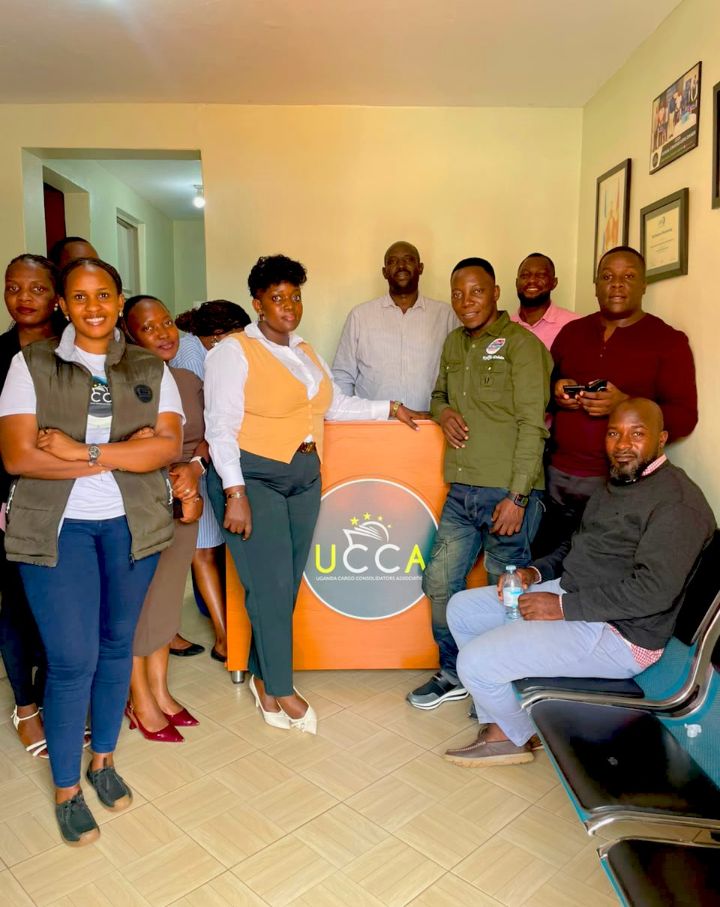


The Uganda Cargo Consolidators Association (UCCA), in partnership with CINAT Group under its logistics and trade consultancy division, convened a consultative meeting with cargo consolidators and industry stakeholders on Wednesday 15th July 2026 to discuss the BeezyLCL consolidation platform — a digital platform designed to address longstanding challenges in cargo consolidation and trade facilitation — at the UCCA office in Bukoto.
The meeting brought together selected UCCA members, the implementation consultant and the system developer to review and establish the platform's capabilities, gather feedback from industry players, and prepare members for the next phase of its implementation and integration with the Uganda Revenue Authority's (URA) Cargo Consolidation Interface (CCI).
Opening the meeting, UCCA leadership emphasized that the consultation was not simply about introducing a new digital platform, but about engaging members in developing a solution tailored to the practical needs of cargo consolidators.
Ms. Kayesu Gloria, speaking on behalf of UCCA, noted that the association's core mandate is to advocate for consolidators by serving as a bridge between the business community, government agencies, and other stakeholders.
Some of the key challenges raised by participants included delays in cargo clearance, inefficient operational processes, regulatory bottlenecks, and communication gaps among industry stakeholders. Participants observed that delays at any stage of the clearance process directly affect business turnover, customer satisfaction, and profitability, underscoring the principle that time is money in the logistics industry.
The consultative approach adopted provides an opportunity to continuously refine the BeezyLCL system based on the practical experiences and feedback from the consolidators. By incorporating users' insights, the platform is being developed to address real operational challenges, improve efficiency, and deliver practical solutions that respond to the evolving needs of the cargo consolidation sector.
During the meeting, the team from CINAT Group assured and explained to the participants that all their views and needs shall be considered when developing this solution, and that all other stakeholders shall be involved as well, since cargo consolidation shipments extend far beyond the transportation of goods. Every shipment involves multiple stakeholders, including traders and importers, cargo consolidators, shipping lines, freight forwarders, clearing agents, warehousing companies, transport providers, and regulatory agencies. As Uganda's logistics and cargo consolidation sector continues to modernize, digital solutions such as the BeezyLCL consolidation platform are expected to play a critical role in improving operational efficiency, transparency, and trade facilitation.
One of the industry's longstanding challenges has been identifying ownership of cargo within consolidated containers carrying goods for multiple traders. Without proper identification and documentation from the point of loading, disputes, clearance delays, and compliance challenges become increasingly difficult to manage.
To address this, the BeezyLCL platform has been designed to provide complete cargo visibility from the moment goods are packed overseas until they are delivered to the final consignee in Uganda. A key innovation of the BeezyLCL platform is its ability to capture cargo information long before vessels arrive at the Port of Mombasa. Traditionally, many importers only begin preparing customs documentation a few days before cargo arrives, despite shipments taking approximately 45 days to travel from major sourcing markets such as China.
One of the major milestones discussed during the meeting was the intended integration of the BeezyLCL platform with URA's Cargo Consolidation Interface (CCI). Rather than requiring consolidators to enter the same information into multiple systems, BeezyLCL will electronically transmit validated cargo data directly to government platforms.
The integration is expected to eliminate duplicate data entry, reduce manual processing, improve data accuracy, accelerate customs procedures, and minimize human error. Once cargo information has been approved by all parties, it will be securely transmitted to URA, enabling customs processes to begin automatically.
Ms. Kayesu Gloria from UCCA reminded participants that the system's success depends on member ownership, continuous feedback, and active participation throughout the pilot and implementation phases. She encouraged members to embrace the platform as their own and contribute to its continuous improvement. By promoting early information sharing, automated workflows, stronger stakeholder collaboration, and seamless integration with government systems, the system will significantly reduce cargo clearance delays, improve regulatory compliance, and increase business profitability for consolidators.
In conclusion, the meeting encouraged members to actively participate in the pilot phase, openly share their experiences, and help shape a digital ecosystem that reflects the realities and evolving needs of Uganda's cargo consolidation industry.
Through continued collaboration between UCCA, CINAT Group, URA and other industry stakeholders, the BeezyLCL platform is expected to become a transformative platform that strengthens trade facilitation and supports the growth of Uganda's logistics sector.